
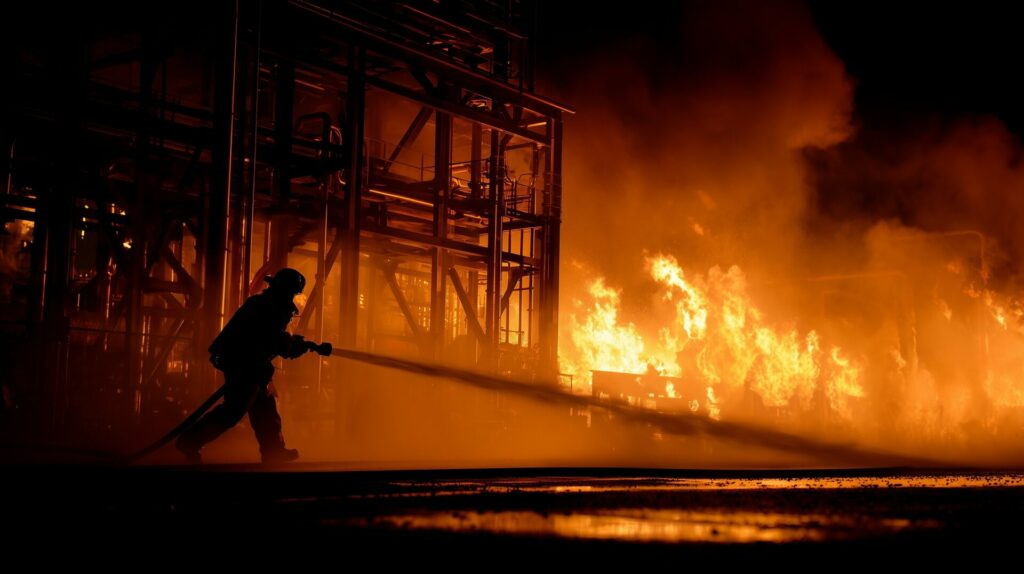
In suppression operations, many wildland firefighters ask themselves Firefighting foam: how does it work? and how it can help them protect vehicles, infrastructure and control lines while using less water and gaining time against the advance of the fire.
Firefighting foam in wildland operations
Firefighting foam is a mixture of water, foam concentrate and air that creates a mass of sticky bubbles. In wildland fires, it is applied to vegetation, the ground or structures to create an insulating layer. This layer promotes cooling, hinders the contact between oxygen and fuel, and delays ignition — something key when the goal is to protect a perimeter or a critical point before the fire front arrives.
How firefighting foam acts on fuel. Firefighting foam: How does it work?
From a physical point of view, foam improves water’s ability to penetrate fine fuels such as brush, litter or dry grass. It reduces surface tension, adheres better to surfaces and stays in place for longer. In this way, the same amount of water becomes more effective. For the wildland firefighter, this translates into fewer refills, more autonomy and a greater ability to protect difficult areas.
Advantages and limits of its use in the wildland environment
Foam offers clear advantages: it increases water efficiency, improves the protection of infrastructure, helps secure firelines and is useful for mop-up work. However, it is not a magic solution. Its effectiveness depends on correct dosage, environmental compatibility and weather conditions. On steep slopes or with very strong winds, the foam can shift or break down before it has fulfilled its function.
Training and best practices with foam. Firefighting foam: How does it work?
To harness its full potential, wildland firefighters need specific training: knowing when to use foam and when not to, how to adjust mix ratios, how to choose the right type of stream and which application technique is best in each situation. Alongside this, it is essential to respect environmental recommendations and current protocols. Foam is one more tool within an integrated suppression strategy, never a substitute for planning, reading the terrain and maintaining strong self-protection practices.