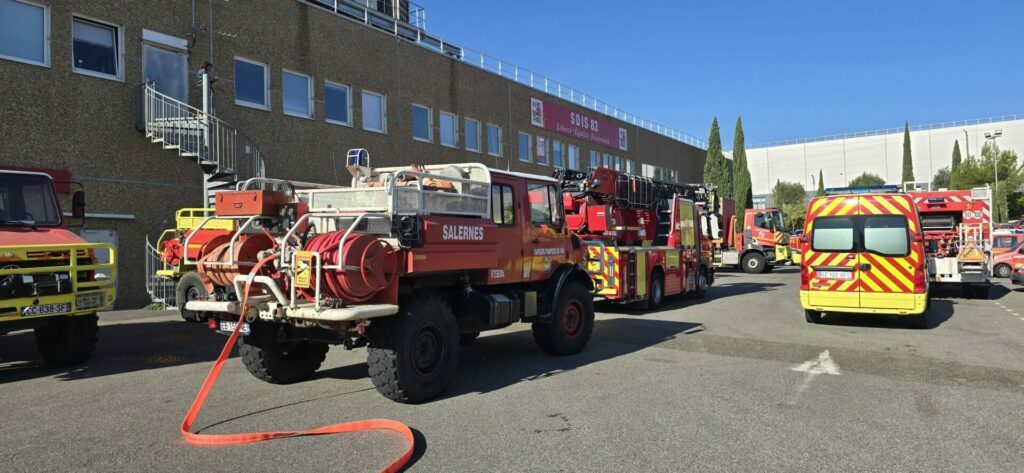
In wildland fire operations, Firefighter survival gear is not an accessory or a secondary consideration. It is a critical element that defines the margin between control and catastrophe. In fast-moving fires, where wind shifts, extreme heat and complex terrain converge, survival depends on having systems designed for the worst-case scenario.
The reality of survival in wildland fires
Wildland firefighters operate in environments where fire behavior can change in seconds. Entrapments caused by slope alignment, sudden wind reversals or spotting are well documented. In these moments, escape routes may disappear and tactical options narrow dramatically. Survival is no longer theoretical; it becomes immediate.
This is where Firefighter survival gear plays a decisive role. Its purpose is not to improve performance during routine operations, but to provide protection when conditions exceed operational limits. It is designed for failure scenarios, not ideal ones.
Effective survival systems must address radiant heat, convective heat and direct flame contact. They must also function under intense stress, reduced visibility and physical exhaustion. ISK Fire Survival develops its solutions with these constraints in mind, focusing on real-world deployment rather than laboratory assumptions.
Firefighter survival gear and thermal protection
Firefighter survival gear must be capable of creating a temporary safe zone when withdrawal is impossible. Thermal protection is the foundation of this capability. Radiant heat alone can be lethal at a distance, while convective heat rapidly overwhelms unprotected personnel.
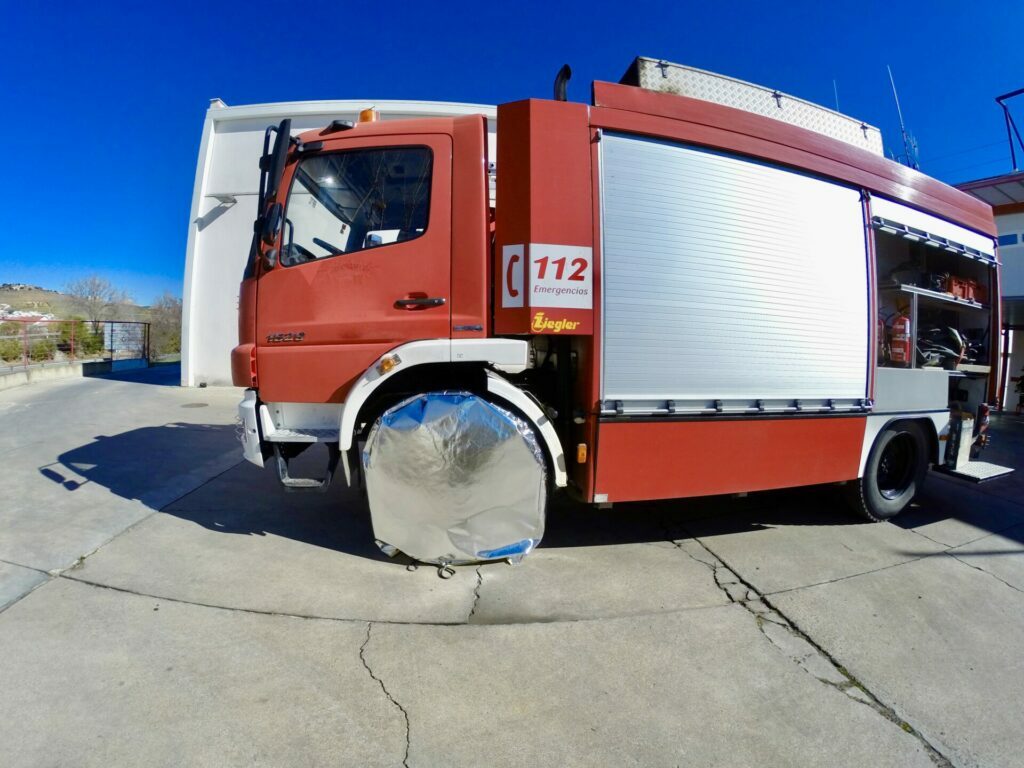
ISK systems integrate certified heat-resistant materials with designs that reduce heat transfer and limit exposure time. Collective shelters, vehicle thermal protections and interior cabin barriers are engineered to work together, not independently. This integrated approach increases survivability during high-intensity fire contact.
Speed of deployment is equally important. Survival equipment that cannot be deployed quickly under pressure loses its value. ISK designs its systems for intuitive use, minimizing steps and reducing cognitive load in extreme situations.
Decision-making under extreme pressure
Survival equipment does not replace tactical judgment. However, it provides a critical buffer when decisions must be made with incomplete information. In wildland fires, even experienced crews can be overtaken by unexpected fire behavior.
Having Firefighter survival gear available changes how teams manage risk. It allows firefighters to operate knowing that a last-resort option exists if escape routes are compromised. This psychological factor is often overlooked, yet it directly influences operational effectiveness.
ISK emphasizes training alongside equipment. Survival systems must be understood, practiced and integrated into operational protocols. Familiarity ensures that deployment under stress is automatic, not improvised.
Firefighter survival gear as a system, not a product
Firefighter survival gear should never be viewed as a single item. Survival depends on layered protection that includes individual, collective and vehicle-based solutions. A shelter alone is insufficient if the vehicle becomes untenable. Likewise, vehicle protection is ineffective without personal and collective options.
ISK Fire Survival develops complete survival ecosystems designed to function cohesively during entrapment scenarios. Each component supports the others, increasing the overall probability of survival.
The future of firefighter survival
As wildland fires continue to increase in intensity and unpredictability, survival-focused equipment will become standard, not optional. Agencies and crews must adapt to this reality.
Firefighter survival gear represents a shift in mindset: accepting that not all situations can be controlled, but that survival can still be engineered. When fire behavior overwhelms strategy and time disappears, equipment designed for the worst moment becomes the most important asset.
In wildland firefighting, survival is not luck. It is preparation, design and trust in systems that work when everything else fails. When all options collapse, ISK is there.