
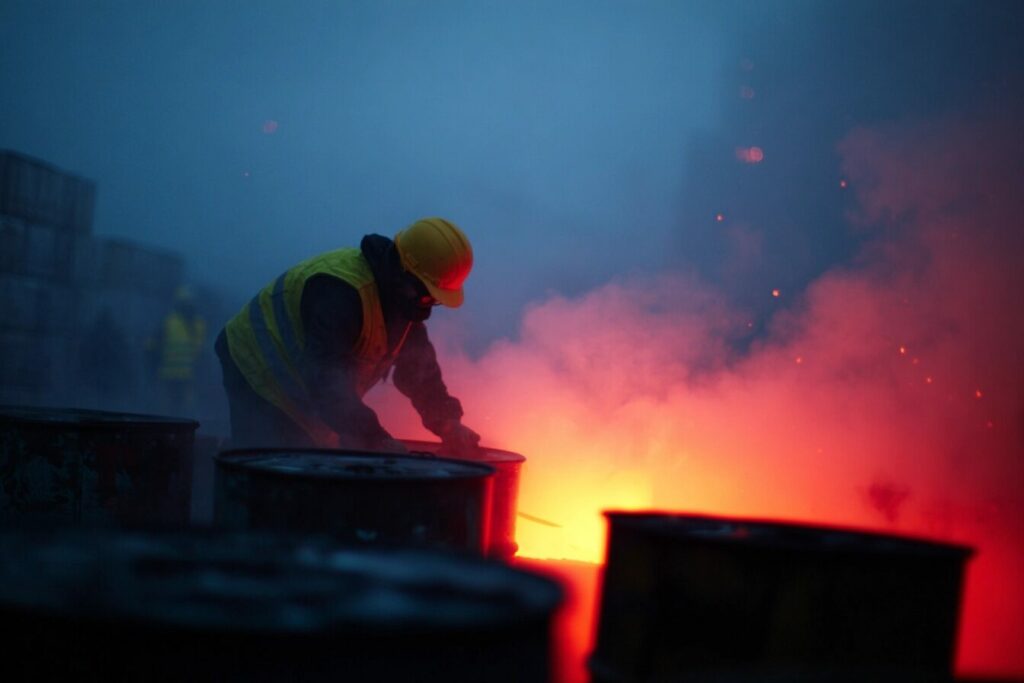
Why does fire change color?
In a wildland fire, observing Why does fire change color? is not just a visual curiosity; for wildland firefighters, the color of the flames and smoke is tactical information that can anticipate dangerous changes in fire behavior.
Why does fire change color in wildland fires?
Fire changes color mainly because of temperature and the type of fuel that is burning. In the wildland environment, it is not the same when fine grasses, oily shrubs or conifer crowns loaded with resin are burning. Each material releases different gases and particles, which emit light differently when heated. That is why we see yellow, orange, reddish or whitish flames in the same fire front.
Why does fire change color?. Operational reading when the fire changes color
When fire shifts toward lighter, brighter tones, it usually indicates an increase in temperature and intensity. In pine stands, for example, the combustion of resins and volatile oils generates very vivid flames and the projection of firebrands over long distances. For the wildland firefighter, this can mean a risk of spot fires ahead of the front, loss of anchor points and the need to rethink the attack position.
Fire color, temperature and tactical safety
Darker, redder flames are usually associated with slower combustion or heavier fuels such as large logs or bulky residues. In contrast, almost white flames reflect very high temperatures and a rapid release of energy. Observing these nuances helps decide whether a water line will be sufficient, whether a flank needs to be reinforced, or whether it is time to retreat to a safety zone before the fire gets out of control.
Training to learn how to “read” fire color
The ability to interpret the color of fire and smoke is not improvised; it is trained. Wildland firefighters combine the observation of the flames with that of the smoke column, the sound of the fire, the rate of spread and the topography. Including these topics in training, supported by real videos and simulations, improves decision-making on the ground. In the end, knowing how to read the color of fire means gaining vital seconds to protect lives and deployed resources.