
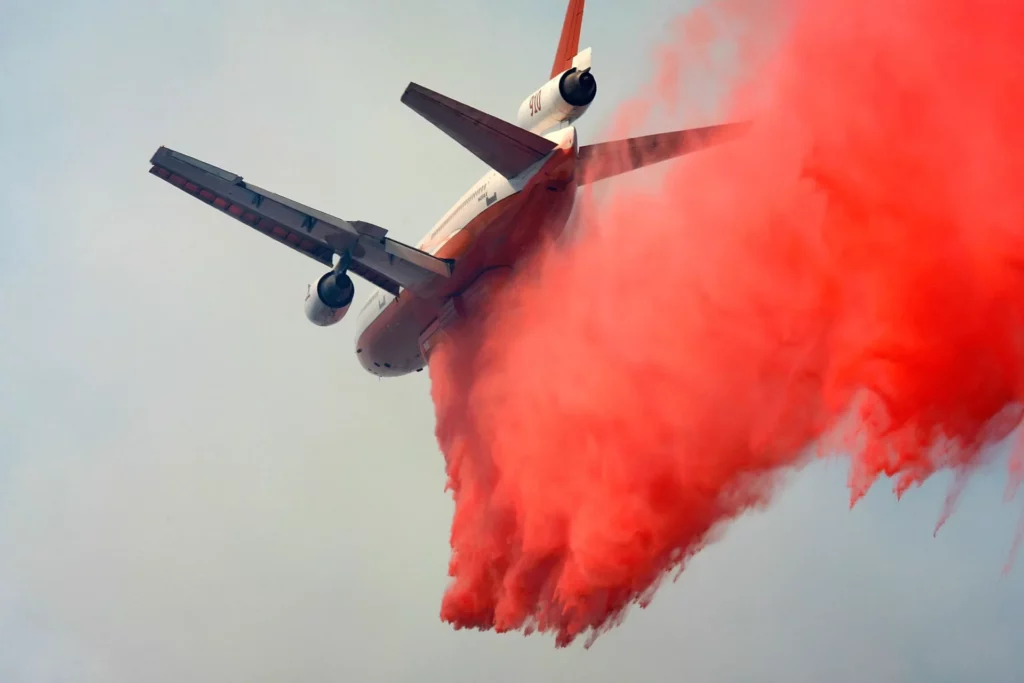
Wildfires in Canada are among the most demanding and challenging natural events on the planet. Each season, thousands of highly specialized professionals mobilize by land and air to contain fire fronts that sometimes exceed all expectations. Among them stand out the renowned flying firefighters of Canada, a global reference in initial attack and aerial operations.
Who are the flying firefighters of Canada
The flying firefighters of Canada are elite crews trained to intervene in wildfires located in remote areas accessible only by helicopter or by airborne deployment. Their work is critical, as Canada is home to vast, inaccessible territories where response speed makes the difference between a controlled spot fire and a megafire.
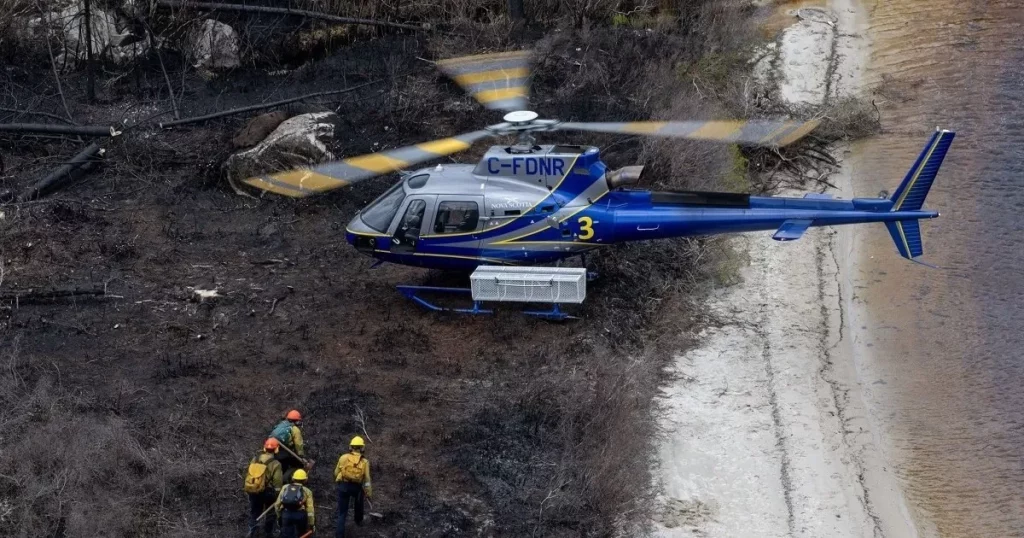
These units carry manual tools, cutting equipment, portable pumps, and survival supplies. Once on the ground, their mission is to conduct initial attack, build control lines, and contain the fire until ground reinforcements arrive.

The flying firefighters of Canada and fheir deployment system
One of the most distinctive aspects of Canadian wildland firefighters is their deployment system. They use light and medium helicopters to insert crews directly into difficult terrain. In some regions, such as Ontario, they also operate forest fire parachutists—known as smokejumpers—who can land in remote locations and begin suppression tasks within minutes.
This aerial deployment enables them to act in critical zones before the fire grows to significant dimensions. Their strategy relies on speed, mobility, and precision—essential pillars for any wildland firefighting force confronting large-scale fires.
Working under extreme conditions
Wildfires in Canada can exhibit extreme behavior: erratic winds, spot fires caused by embers, and highly reactive fuel conditions. Flying firefighters must be prepared for long operational periods, sudden changes in fire behavior, and the possibility of temporary entrapment on control lines.
For this reason, crews regularly train in escape techniques, deployment of fire shelters, and advanced self-protection procedures. Globally, companies like ISK Fire Survival develop specialized solutions for these types of scenarios, including thermal barrier systems, self-protection nozzles, and collective fire shelters designed to increase survival probability during entrapment situations.
The importance of rapid initial attack
The success of the flying firefighters of Canada is rooted in the effectiveness of their initial attack operations. Detecting, reaching, and acting quickly prevents fires from evolving into large-scale events. When aerial resources and helitack crews work together efficiently, containment times decrease significantly.
This philosophy serves as inspiration for wildland firefighting agencies around the world, many of which analyze the Canadian model to adapt it to their own ecosystems and operational realities.
The flying firefighters of Canada exemplify strategy, technical skill, and resilience in the face of wildfires. Their ability to arrive before anyone else, operate in extreme environments, and maintain safety as their highest priority has made them an international benchmark. In a world where fires are becoming more intense, their experience continues to guide the path toward more effective and safer wildfire suppression.