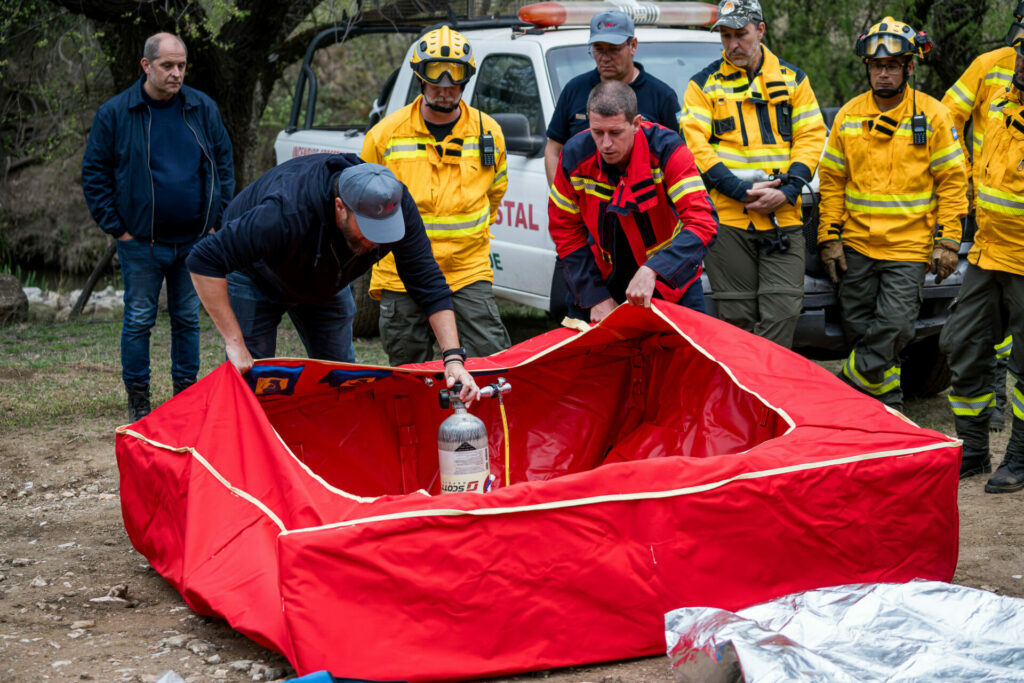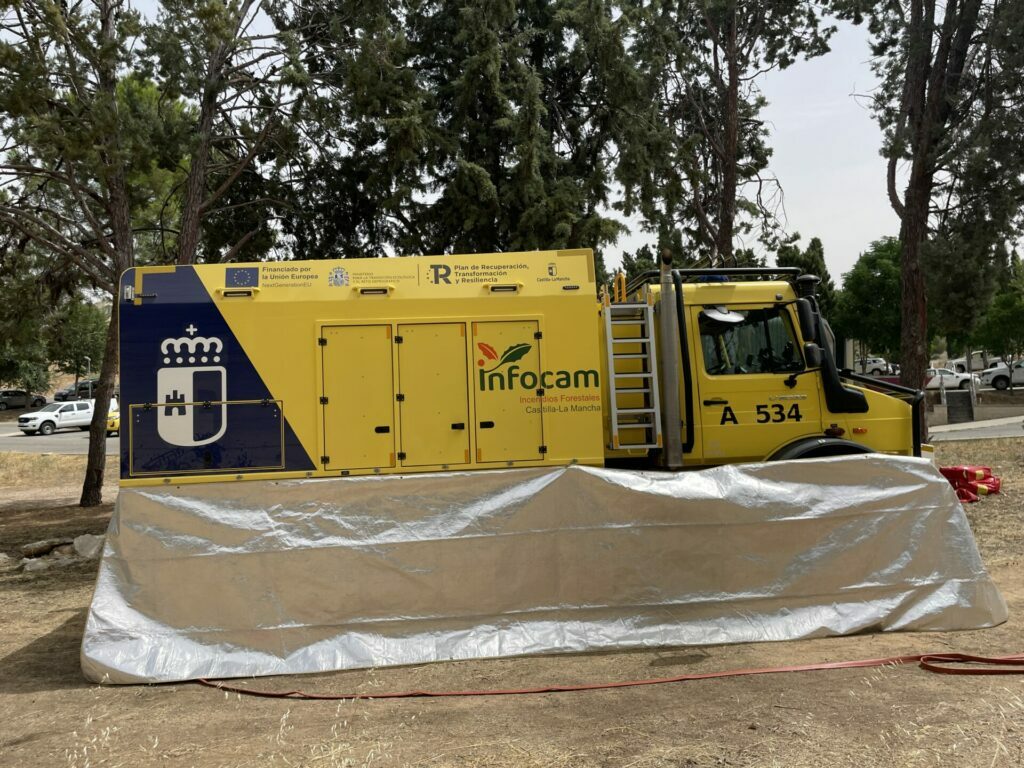
Fire suppression equipment is no longer limited to tools designed only to extinguish flames. In modern wildland firefighting, it represents a complete survival system that combines suppression capacity with firefighter protection. As fire behavior becomes more extreme and unpredictable, this type of equipment plays a decisive role in keeping forest firefighters alive when conditions deteriorate rapidly.
The role of Fire suppression equipment in wildland operations
Wildland fires evolve faster than ever. Sudden wind shifts, steep terrain, and extreme fuel loads can turn a manageable operation into a critical scenario within minutes. In these situations, must do more than control fire spread. It must actively reduce thermal exposure and create safer operational environments for crews on the ground.
Why Fire suppression equipment must include self-protection
Traditional suppression tools focus on attacking the flame front. However, real incidents have shown that suppression alone is not always possible. This is where it designed with self-protection capabilities becomes essential. Systems that generate water curtains, thermal barriers, or protected zones allow firefighters to withstand radiant and convective heat during entrapment situations.
ISK Fire Survival develops solutions based on this reality. Their approach integrates suppression and survival into a single operational concept. Equipment is engineered assuming that escape routes may fail and that crews may need to hold their position temporarily under extreme thermal stress.
Key components of modern fire suppression systems
Modern wildland operations require coordinated systems rather than isolated tools. Fire suppression should work as part of a layered protection strategy. This includes water-based protection devices, vehicle-mounted thermal shields, and collective protection solutions.
Each component supports the others. Water curtains reduce radiant heat. Thermal protections preserve vehicle integrity. Collective shelters provide a last-resort refuge. ISK designs its systems to function together, reducing decision time when pressure is highest.
Fire suppression equipment and vehicle survivability
The vehicle is often the last safe space during a wildland fire entrapment. Heat damage to tires, lower body panels, or cab areas can immobilize the crew at the worst possible moment.
ISK addresses this risk through certified thermal protection solutions that shield vulnerable vehicle zones. By maintaining vehicle operability and cab integrity, crews retain mobility and a protected environment while fire intensity peaks.
Training and deployment
Even the most advanced equipment fails without proper integration into operational protocols. Fire suppression equipment must be intuitive, fast to deploy, and reliable under stress. ISK systems are designed to be activated within seconds, even in low visibility and high-temperature conditions.
Training focuses on muscle memory and simplicity. Firefighters must deploy protection instinctively, without complex steps or decision overload. This philosophy directly influences the design and configuration of ISK solutions.
The future
The future of wildland firefighting will demand equipment capable of operating in increasingly hostile environments. Fire suppression equipment will continue to evolve toward integrated survival systems rather than standalone suppression tools.
ISK Fire Survival bases its innovation on real operational feedback and documented entrapment scenarios. The objective is clear: increase survival probability when fire behavior exceeds suppression capacity. In wildland firefighting, success is not only measured by hectares protected, but by crews returning safely after the fire passes.
By combining suppression capability, thermal protection, and rapid deployment, modern systems redefine what Fire suppression equipment truly means in today’s wildland fire context.