Fire safety equipment
In the context of wildland firefighting, Fire safety equipment represents the final barrier between a firefighter and a rapidly evolving fire environment. When fire behavior exceeds predictions, escape routes fail, and suppression capacity is overwhelmed, survival depends on having equipment specifically designed for extreme wildfire scenarios. Modern wildfires demand a safety-oriented approach that goes beyond suppression and focuses on protecting lives when conditions deteriorate suddenly.
Fire safety equipment as a survival system in wildland operations
Wildland fires are increasingly characterized by extreme intensity, rapid spread, and unpredictable behavior. In these conditions, Fire safety equipment must be understood as a complete survival system rather than a collection of isolated tools. Its purpose is not only to reduce exposure but to create temporary safety zones when firefighters are caught in critical situations.
ISK Fire Survival develops solutions based on real wildfire entrapment scenarios. These systems are designed to protect against radiant heat, convective heat, and direct flame contact. The goal is to buy time, reduce thermal impact, and increase survival probability when tactical options disappear.
A key element of this approach is integration. Safety equipment must work together, allowing firefighters to transition quickly from suppression to self-protection. Equipment that cannot be deployed under stress or extreme heat has little operational value in real incidents.
Key components of Fire safety equipment for wildland firefighters
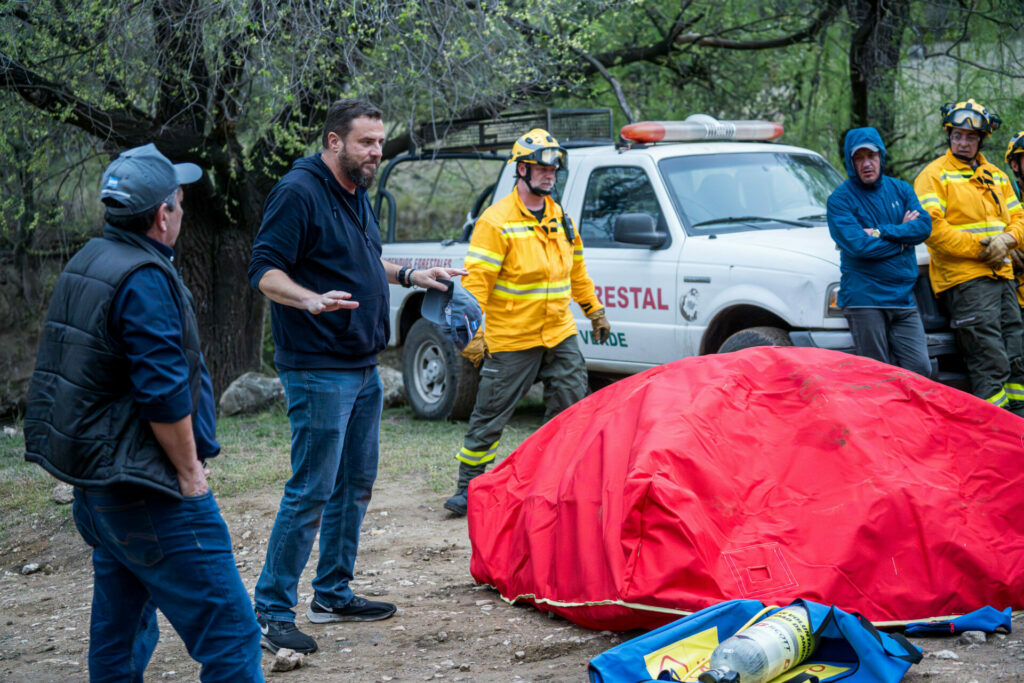
Effective Fire safety equipment includes collective shelters, vehicle protection systems, and water-based self-protection solutions. Collective shelters provide immediate refuge for multiple firefighters during entrapments. They are designed to resist high radiant heat and limit convective heat exposure during fire front passage.
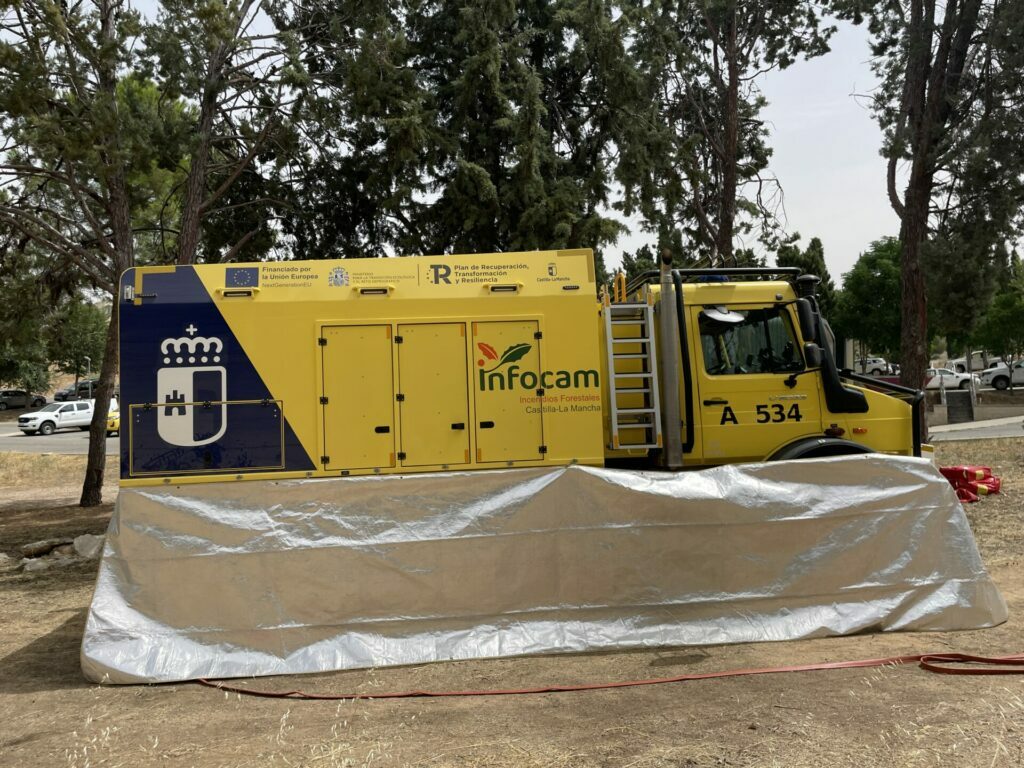
Vehicle protection is equally critical. Thermal skirts, fire-resistant curtains, and protective barriers help prevent vehicle failure, preserving a vital safety zone. In many wildfire incidents, the loss of vehicle integrity has been a decisive factor in fatal outcomes.
ISK systems are engineered to deploy rapidly, even under limited visibility and extreme stress. This rapid deployment capability is essential when seconds determine survivability. The equipment is tested under demanding conditions to ensure consistent performance when firefighters need it most.
Beyond physical protection, safety equipment must support operational decision-making. Knowing that reliable systems are available allows teams to focus on situational awareness rather than panic-driven reactions.
Operational value of advanced wildfire safety solutions
The real value of Fire safety equipment is revealed when fire behavior escalates beyond control. In wind-driven fires, slope-driven runs, or sudden flare-ups, safety systems become the last defensive measure. These moments define whether an incident ends with injuries or survivals.
ISK Fire Survival emphasizes simplicity and robustness. Equipment must function with minimal actions and clear procedures. Complexity increases the risk of failure under pressure, especially when firefighters are fatigued or disoriented.
Another essential aspect is certification. Equipment used in wildfire safety must meet strict European standards to ensure predictable behavior under thermal stress. Certification provides confidence that materials and designs perform as intended in extreme heat environments.
Training, strategy, and equipment alignment
No safety system works in isolation. Fire safety equipment must be integrated into training, planning, and operational doctrine. Firefighters need to understand when and how to deploy safety systems, and commanders must factor these tools into tactical decisions.
ISK works closely with wildland firefighting agencies to align equipment design with real operational needs. This collaboration ensures that safety solutions reflect field realities rather than theoretical assumptions.
As wildfires continue to intensify globally, reliance on advanced safety systems will increase. Investing in certified, purpose-built equipment is no longer optional. It is a strategic decision that directly affects survival outcomes.
In extreme wildfire environments, preparation determines resilience. When suppression fails and conditions turn hostile, Fire safety equipment becomes the difference between vulnerability and protection. ISK stands for one principle above all others: when everything else fails, survival must still be possible.